
Ahead of the IAA Transportation 2026 in Hanover, Bernd Spies, Member of the Executive Board, discusses the transformation of the commercial vehicle industry and explains how Knorr-Bremse is driving progress in the areas of zero emissions, automated driving, and digitalization.
Mr. Spies, the commercial vehicle industry has been undergoing change for years. What makes the current transformation so special?
Above all, the speed and simultaneity of the changes. New powertrains, automated driving functions, and digital systems are transforming commercial vehicles in parallel and in a fundamental way. This extends far beyond technology to vehicle architectures, business models, and competitive structures. At the same time, markets are evolving very differently from region to region, as are regulatory requirements. This combination makes the transformation challenging, but it also opens up enormous opportunities.
How differently are commercial vehicle markets currently developing?
We continue to operate in a generally challenging market environment. In Europe and North America, the market is very subdued. In China, electrification is progressing at an enormous pace. These differences shape our customers’ decisions. At the same time, there is a clear common denominator: Technologies are advancing at a rapid pace, but market ramp-up depends heavily on whether infrastructure, regulations, total cost of ownership, and incentive programs align. Therefore, having clarity on the regulatory framework early on is also a key factor. Manufacturers worldwide are therefore seeking solutions to make their vehicles more efficient and safer, as well as more connected.
How is Knorr-Bremse responding to this?
Our answer is to make complexity manageable and to offer solutions for tomorrow’s requirements. To this end, we have further developed our global organization and clearly focused our innovation approach. This enables us to support our customers worldwide in implementing new vehicle architectures—with innovations that deliver measurable benefits, can be flexibly integrated, and are economically scalable. That is why we see ourselves as development partners to OEMs.
How is this vision reflected at your IAA booth?
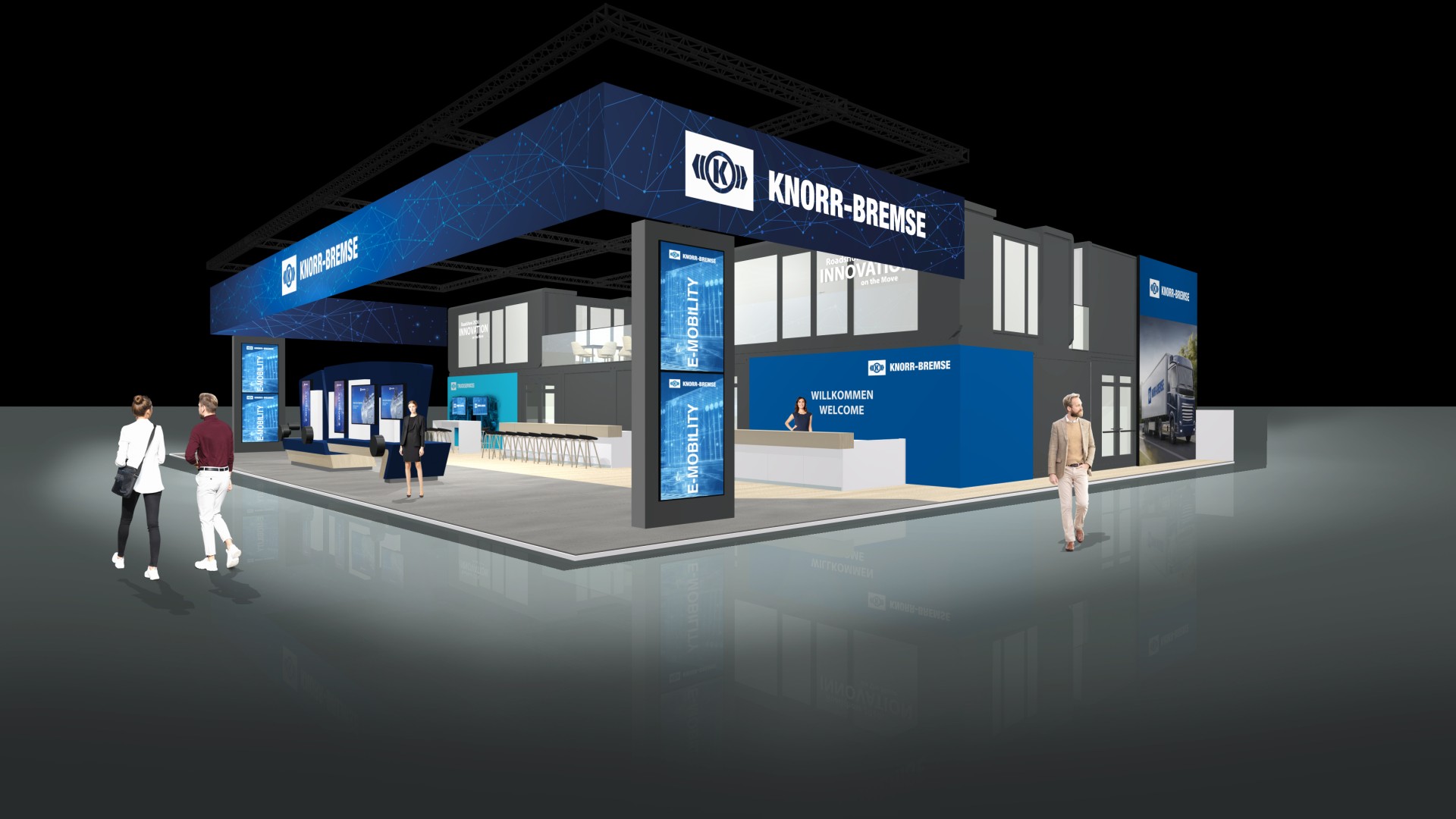
The centerpiece of our booth is our Center Display and our Communication Center. There, using exhibits and digital applications, we demonstrate how we provide concrete solutions to key market requirements—from zero emissions and redundancy to automated driving, road safety, and digital services. Visitors will thus experience not only individual products, but also the connection between technological developments, new vehicle architectures, and real-world requirements. At the same time, we’re continuing our sustainable booth concept: We’re once again relying on reusable containers and will subsequently use the exhibits and digital content for a truck roadshow. This allows us to continue the dialogue with customers beyond the trade show.
Bernd Spies
As a member of the Executive Board of Knorr-Bremse AG, Bernd Spies has been responsible for the Commercial Vehicle Systems Division worldwide since 2022.
New vehicle architectures are a major topic. What is changing?
New vehicle architectures are no longer created solely from individual components. The key lies in the interplay of hardware, software, and data. Functions are becoming more interconnected; systems must become more compact, flexible, and software-enabled—and integrate as seamlessly as possible into the vehicle. For us, road safety remains the central guiding principle. After all, new vehicle concepts can only be successfully brought to the road if they function reliably and safely. One example of this is Electric Power Steering: The fully electric steering system supports efficiency, e-mobility, and automated driving.
Where does the industry trend toward zero emissions stand today—and what is Knorr-Bremse doing to advance it?
In addition to traffic safety, zero emissions remains the clear goal for road transport. However, the path to achieving this goal is not uniform. Our customers worldwide need scalable solutions that fit their vehicle concepts, applications, and market conditions. For us, this is not just about reducing CO₂. Zero Emission also means greater energy efficiency, less noise, and lower oil and particulate emissions. This is where we bring our systems expertise to bear—without compromising on safety or performance. A concrete example is our new oil-free electric Multi Tumble Piston (MTP) eCompressor, which we are unveiling for the first time at the IAA. The MTP stands for an efficient, low-noise compressed air supply in electrified commercial vehicles.

In addition to traffic safety, zero emissions remains the clear goal for road transport.
Is automated driving viewed more realistically today?
Yes, the discussion has become more realistic. Automated driving is coming, but not in every market and not in every application at the same time. We see the first use cases primarily in hub-to-hub transportation. The key is that the necessary technologies are gradually becoming market-ready. And “market-ready” here means, above all, safety and availability. As automation increases, responsibility shifts from the driver to the vehicle—and thus to the technology. This requires robust, fail-active, and redundant vehicle architectures in which safety-critical functions such as braking and steering remain available even in the event of a failure. After all, what counts in the end is not a spectacular demonstration, but reliable production deployment. The upcoming production readiness of our redundant braking system, rGSBC, is an important milestone in this regard.
What role does digitalization play for Knorr-Bremse—from the vehicle to the aftermarket?
For us, digitalization doesn’t end with the individual vehicle. Software is shaping more and more functions; vehicles are generating more data, and this creates new opportunities for connected services—from the OE business through operations to the aftermarket. The key is that data is translated into tangible benefits, such as higher vehicle availability, more efficient maintenance processes, and more cost-effective fleets. AI is also gaining importance in this context, for example, in streamlining processes and in product development. I’m thinking, for instance, of a pilot project in India: there, AI agents support software development for brake control systems with automated quality checks.
What role does the CVS Service Platform play in this?
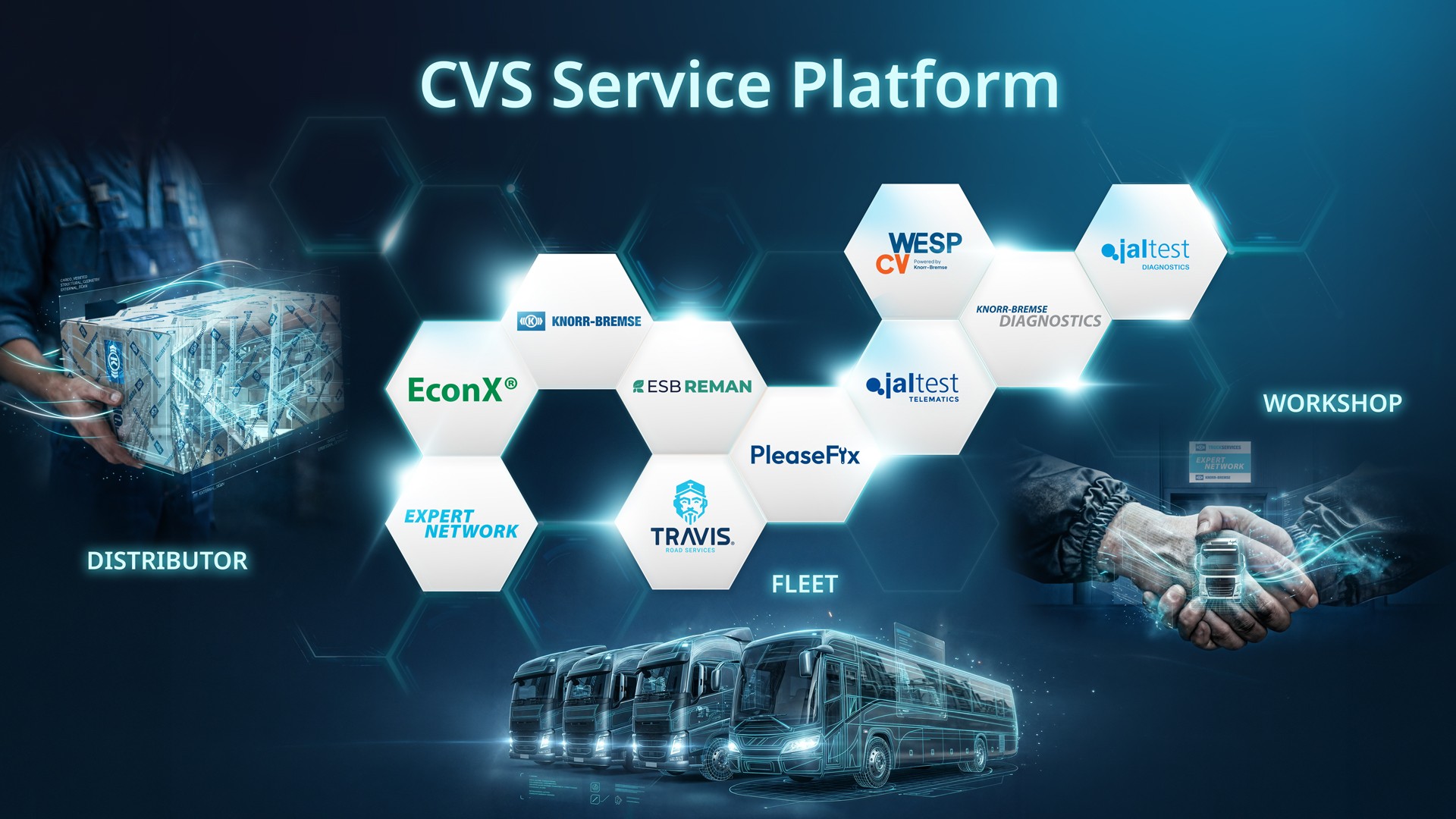
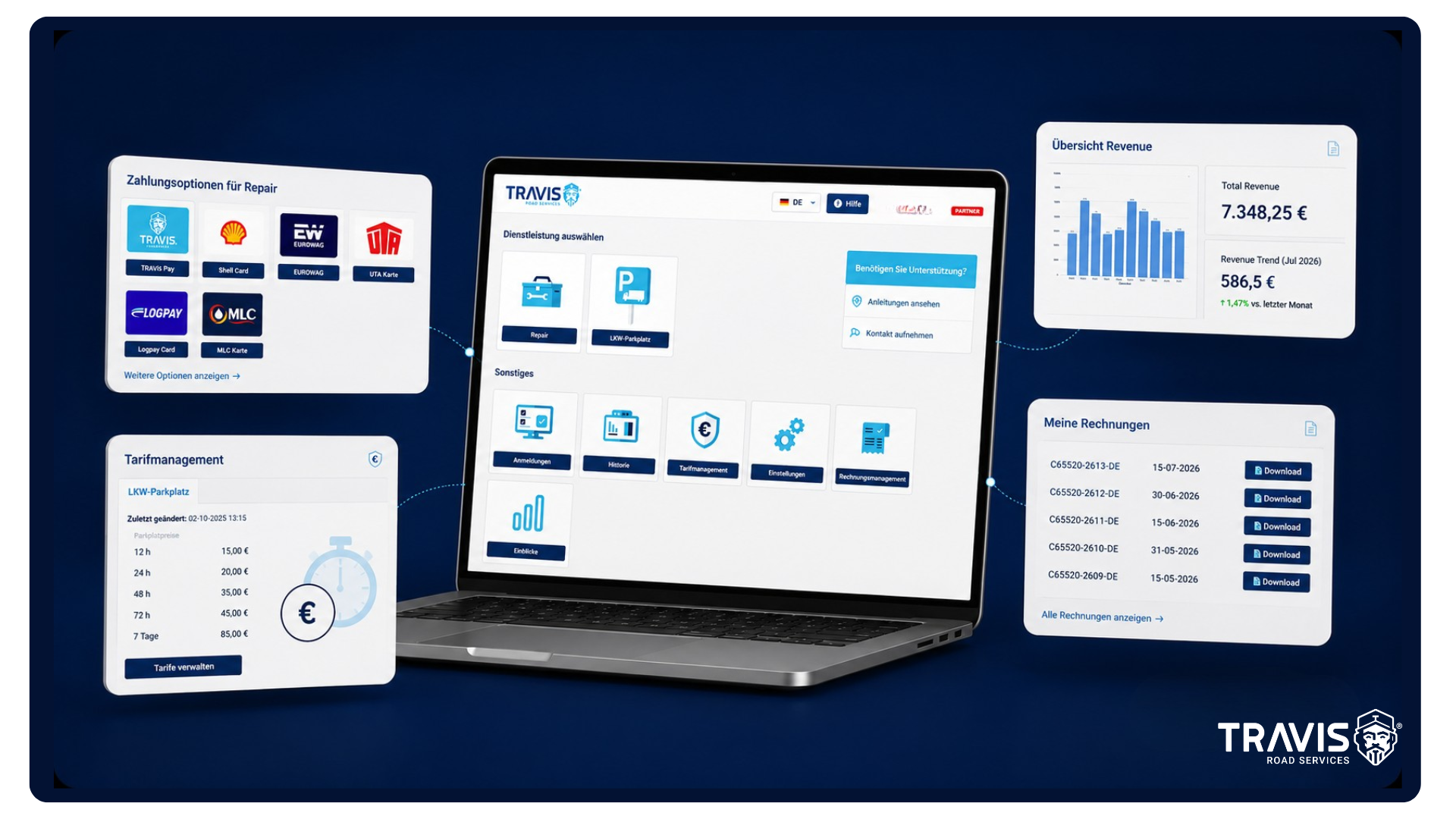
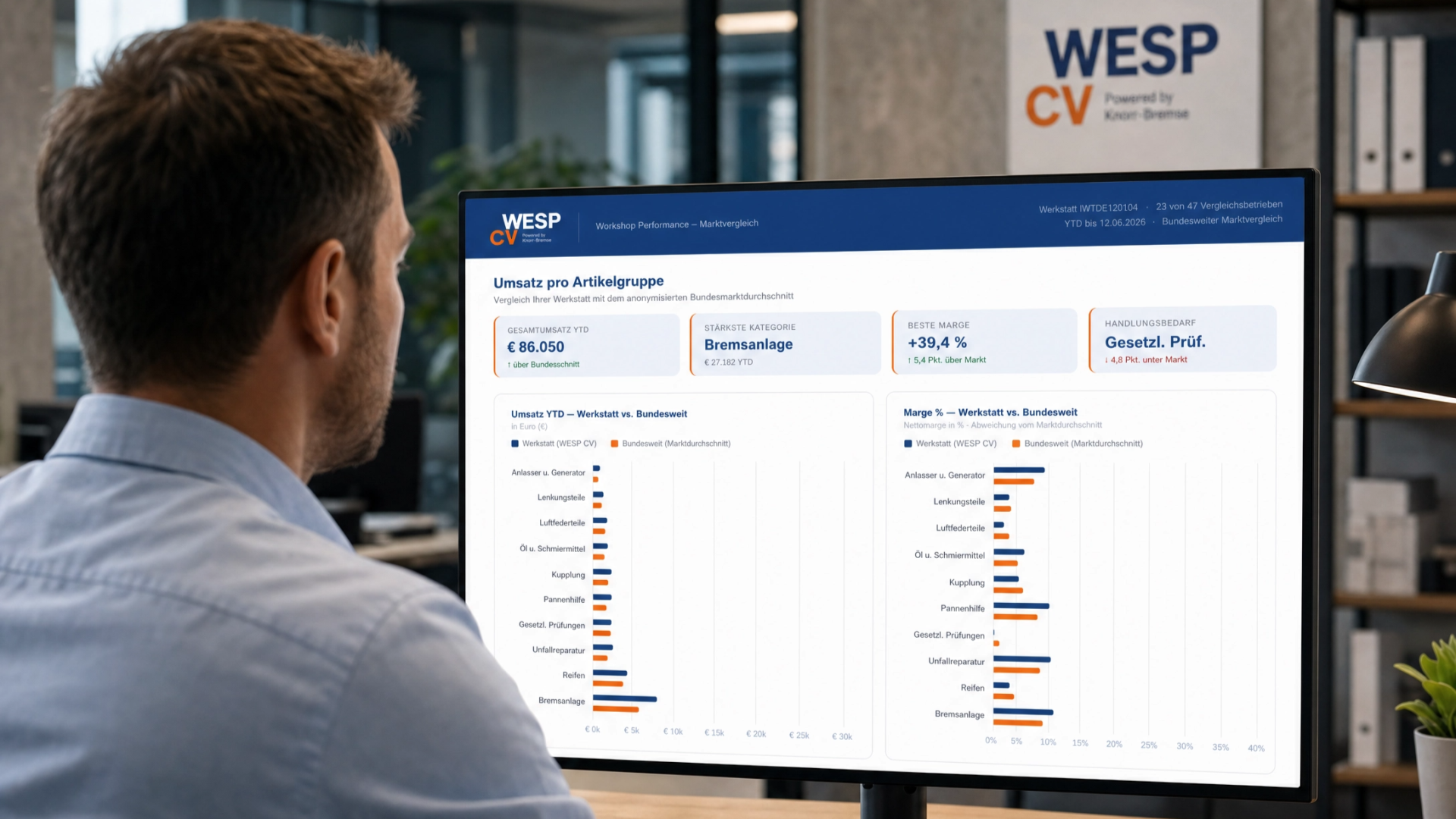
With the CVS Service Platform, we’re continuing to drive the transformation of the aftermarket. Applications such as TRAVIS, PleaseFix, and WESP CV support the planning, management, and optimization of service processes. Together with partners like Cojali, we’re consistently expanding our diagnostic and service offerings. Our goal is to make the aftermarket more efficient and transparent—for fleet operators, workshops, and distributors.
So how can the transformation of the commercial vehicle market succeed?
It is crucial that technological development and market ramp-up align. New technologies require significant investment and long development cycles. That is why manufacturers, suppliers, and other partners need to establish a shared understanding early on of which solutions make technical sense and are viable in the market. At the same time, innovation needs reliable framework conditions. Companies need to know what requirements will apply in the future—for example, regarding EURO 7 or in the area of infrastructure. Only then can they plan investments strategically and put new technologies into practice.
You’ve described the market as challenging right now. Why are you optimistic about the future?
Because we’re seeing tremendous innovative momentum worldwide. The commercial vehicle industry is rethinking fundamental principles—from vehicle architecture to digital business models. Anyone who focuses solely on the uncertainties during this phase overlooks the momentum that is emerging as a result. For Knorr-Bremse, this represents a clear opportunity for growth. We’re aligning our innovation pipeline toward more “content per vehicle” and will demonstrate at IAA Transportation what that means in concrete terms: zero emissions, automated driving, and digital services. The key now is to put these technologies into practice together with customers and partners.